Ready to transform your hiring?Your next great hire is waiting.
Your next great hire is waiting.
Let AI find them.
Join engineering teams who replaced week-long hiring cycles with hours. No credit card required.
Join engineering teams who replaced week-long hiring cycles with hours. No credit card required.
The hiring industry is living through its biggest structural shift since the job board. Halfway through 2026, the direction is clear enough to name. Here are the seven trends actually reshaping recruitment - with the numbers behind them.
AI use across HR tasks climbed to 43% in 2026, up from 26% in 2024, and 88% of companies now use some form of AI in initial candidate screening. The experimental phase is over - the differentiator now is not whether a company uses AI in hiring but how well-designed its implementation is. Results for adopters are material: typical time-to-hire reductions of 25-50% and cost-per-hire savings around 30%.
Nearly 70% of employers now use skills-based hiring practices, displacing degree and credential screens with direct evaluation: assessments, structured interviews, work samples. The logic is economic as much as philosophical - skills-first funnels tap talent pools that credential filters never saw, in a market where the skills gap remains employers’ loudest complaint.
For decades the resume decided who got evaluated. As AI interviews make it economical to interview every applicant rather than the best-looking 10% of resumes, evaluation is moving to the front of the funnel. The resume is becoming metadata - the demonstrated conversation is becoming the application.
The EU AI Act’s high-risk provisions, NYC Local Law 144’s bias-audit requirements, and a spreading patchwork of US state laws now impose transparency, auditing, and human oversight on automated hiring tools - with emotion-recognition in hiring banned in the EU outright. Consolidation around auditable, evidence-based tools is squeezing out the pseudo-science.
Two-thirds of adults say they are wary of AI making hiring decisions, and only about a quarter trust AI to evaluate them fairly. Employers are responding with the only fix that works: transparency about what is measured, humans making final calls, and fast, substantive feedback. Candidate experience is now tracked as a core recruiting KPI at leading companies.
The macro backdrop is a market that neither hires nor fires aggressively. Job-switching premiums have collapsed, entry-level postings have fallen steeply, and each open role attracts record application volume - AI-assisted mass applying meets AI-assisted mass screening. In that arms race, evaluation quality, not sourcing volume, is where hiring is won.
The recruiter of 2020 scheduled screens. The recruiter of 2026 designs evaluation systems, audits their fairness, and spends recovered hours where humans are irreplaceable: closing, coaching, and judgment.
Every trend points the same direction: hiring is becoming an evidence discipline. Structured data instead of gut feel, demonstrated skills instead of proxies, audited algorithms instead of unexamined instinct - with humans deciding, faster and better informed. The companies treating that shift as an operating model, not a tool purchase, are the ones compounding the advantage.
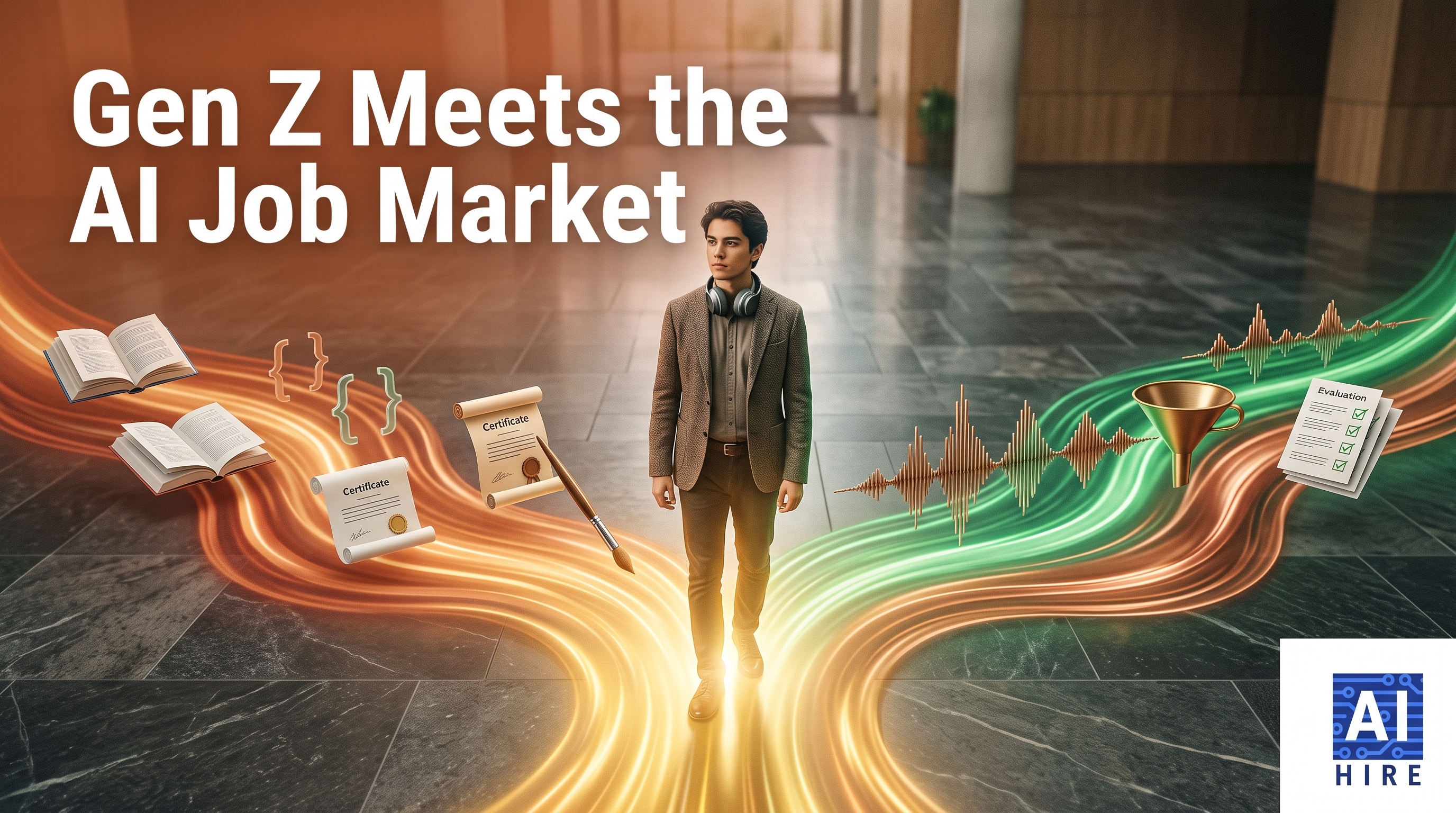
The most digitally native generation is colliding with the most automated hiring market in history. What the data says Gen Z actually wants - and why meeting it improves hiring for everyone.
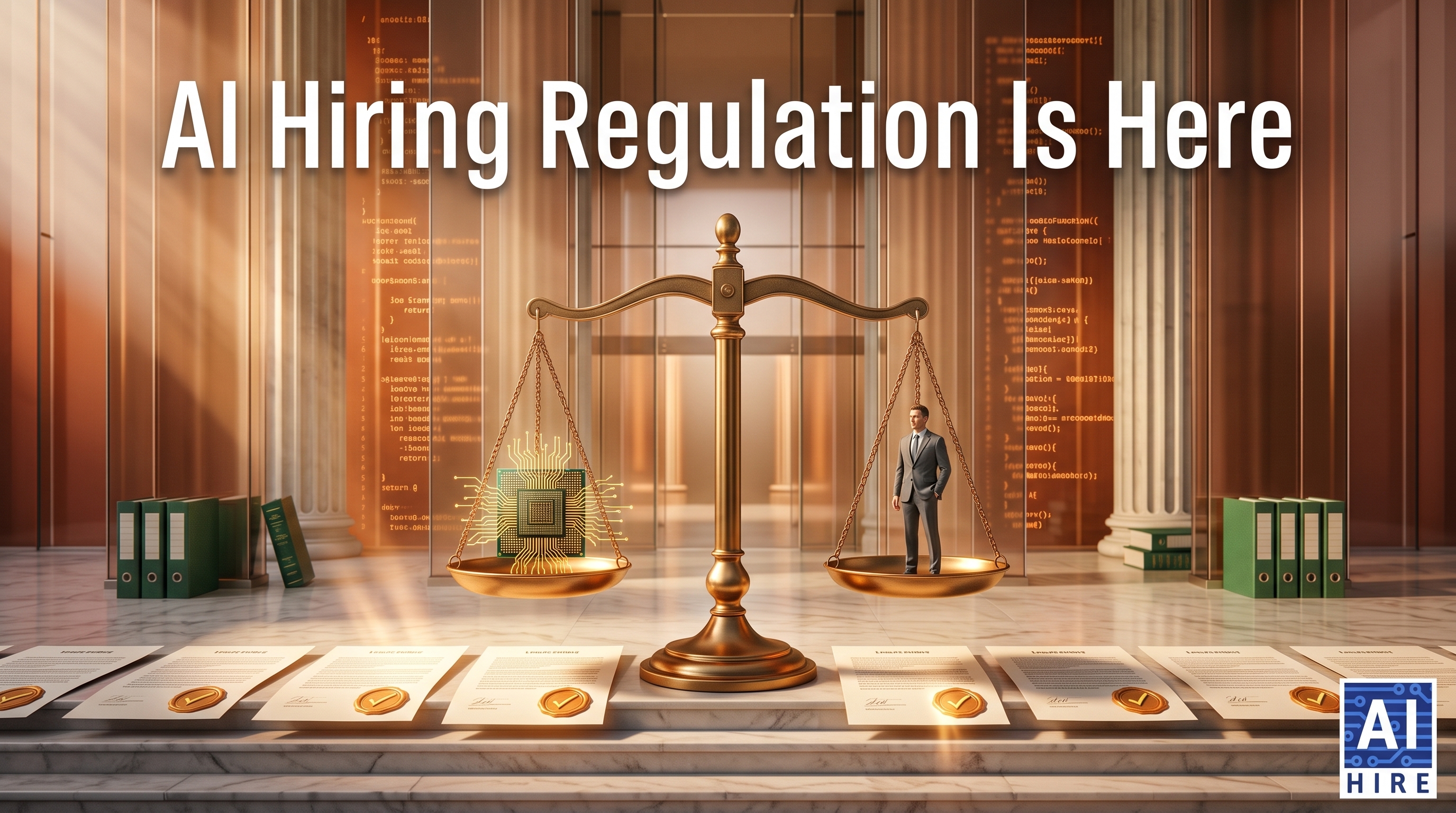
Between the EU AI Act, NYC Local Law 144, and spreading state laws, hiring is now among the most regulated uses of AI. What the rules require, and why they favour tools built honestly.

Entry-level postings are down 29 points since 2024 as AI absorbs the drudgery that once trained juniors. What is really disappearing, the paradox employers face, and how both sides adapt.