Ready to transform your hiring?Your next great hire is waiting.
Your next great hire is waiting.
Let AI find them.
Join engineering teams who replaced week-long hiring cycles with hours. No credit card required.
Join engineering teams who replaced week-long hiring cycles with hours. No credit card required.
The rules of standing out have quietly inverted. For decades, the winning strategy was signalling: the right degree, the right employer names, the right buzzwords for the resume filter. But with nearly 70% of employers now practising skills-based hiring - and AI interviews and assessments testing every applicant directly - the market increasingly pays for what you can demonstrate, not what you can claim. For candidates without elite pedigrees, this is the best news in a generation. Here is how to play the new game from application to offer.
AI tools have made it trivial to fire off two hundred identical applications - which is precisely why that strategy stopped working. Employers drowning in generic volume now weight the signals mass-appliers cannot fake: applications that engage with the specific role, and above all, performance in the evaluation steps. Apply to fewer roles, chosen honestly against your actual skills, and put your energy where the decision is made - the assessment and the interview.
In a skills-first funnel, the screening assessment or AI interview is not a formality before the real thing - it is the primary filter, and often the great equaliser. The candidate from a no-name background who delivers an excellent structured interview beats the brand-name resume with a vague one, because the employer is looking at evidence, not pedigree. Prepare accordingly: study the job description as a rubric, prepare a specific story for each listed skill, and take the interview when you are rested and sharp - one advantage of asynchronous formats is that you choose the moment.
Demonstrated skill compounds outside interviews too. The strongest candidates in a skills-first market maintain a small portfolio of verifiable work: a project repository, a case study write-up, a before-and-after of something they improved, a certification with teeth. One genuine artefact - “here is the thing, here is what I did, here is what happened” - outperforms a page of adjectives. It also stocks your story bank for every interview that follows.
The line is simple: AI that improves your preparation is leverage. AI that replaces your performance is fraud - and in a pipeline that tests skills directly, fraud gets exposed at the very next step, with follow-up questions.
Legitimate and powerful: using AI to identify gaps against a job description, generate likely interview questions, run mock interviews out loud, and critique your answers. Candidates who rehearse with AI mock interviews walk into the real one already fluent in the format.
Speed and responsiveness are underrated differentiators. Complete assessments promptly - momentum signals interest. Respond to messages within a day. Ask sharp questions in the human rounds - the skills-first pipeline means the humans you finally meet already believe you are competent, so use that time on fit, expectations, and mutual honesty. And if you are rejected with feedback, mine it - in a market that measures skills, feedback is literally a training plan for the next attempt.
Stop optimising for getting past the gatekeepers, because the gatekeepers are dissolving. Optimise for being genuinely good and provably so - the market has finally built the machinery to notice.
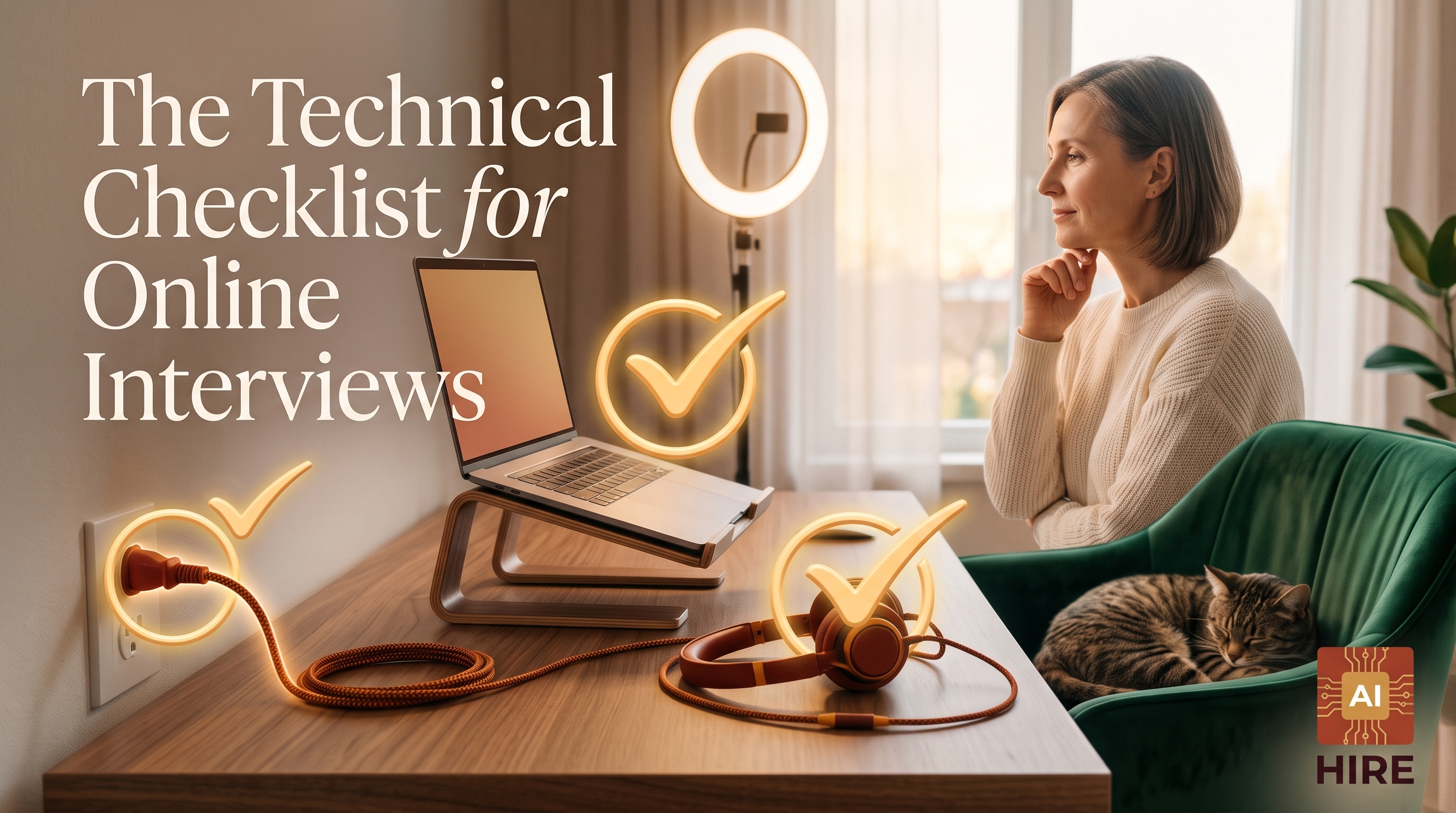
Technical problems are the top preventable reason candidates underperform online - and when an AI is transcribing you, audio quality is scoring quality. The full preflight checklist.
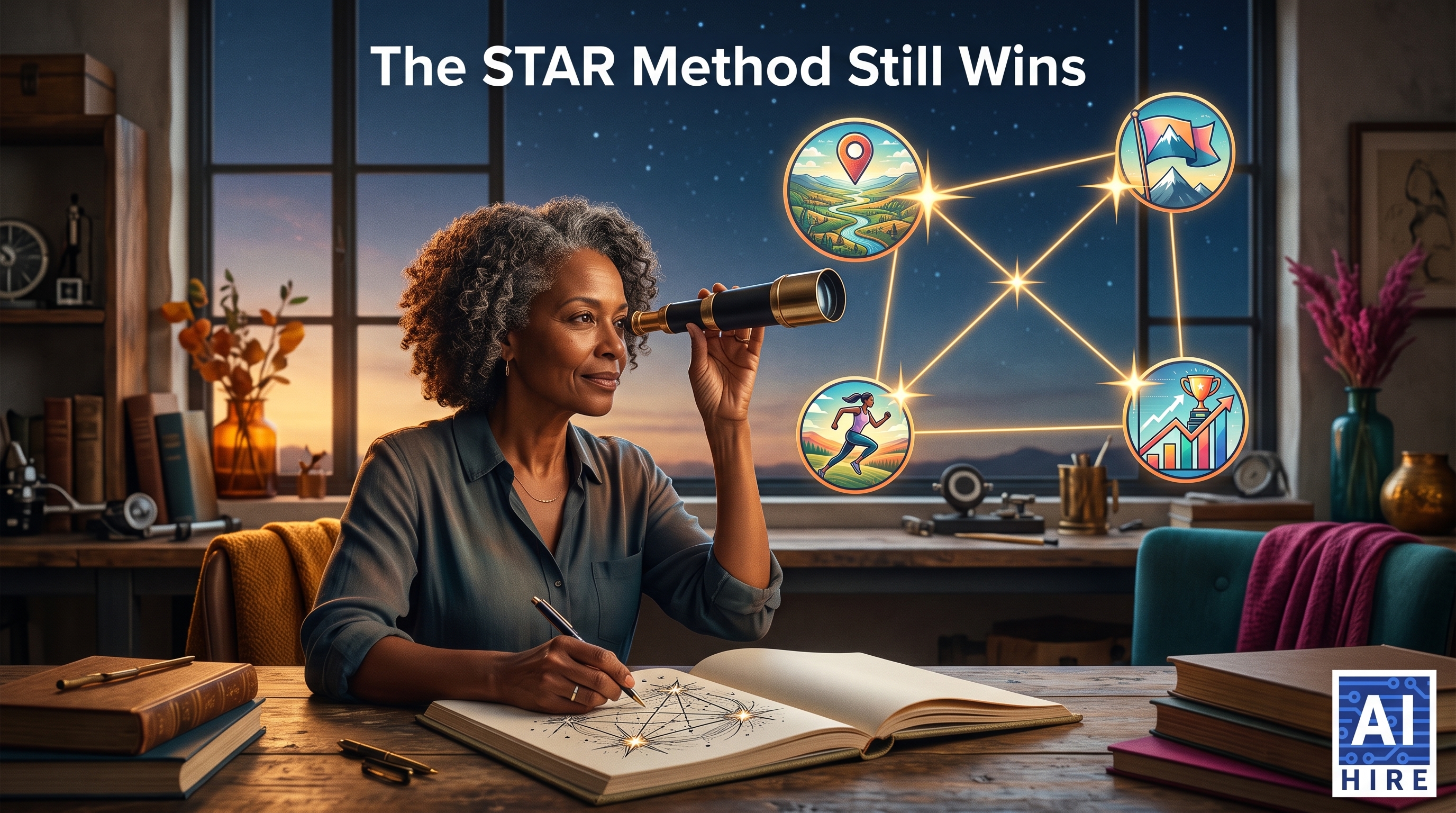
Interview formats changed beyond recognition - the STAR method got more valuable, not less. Why rubric-based and AI evaluation rewards structured answers, with a worked example and a prep plan.
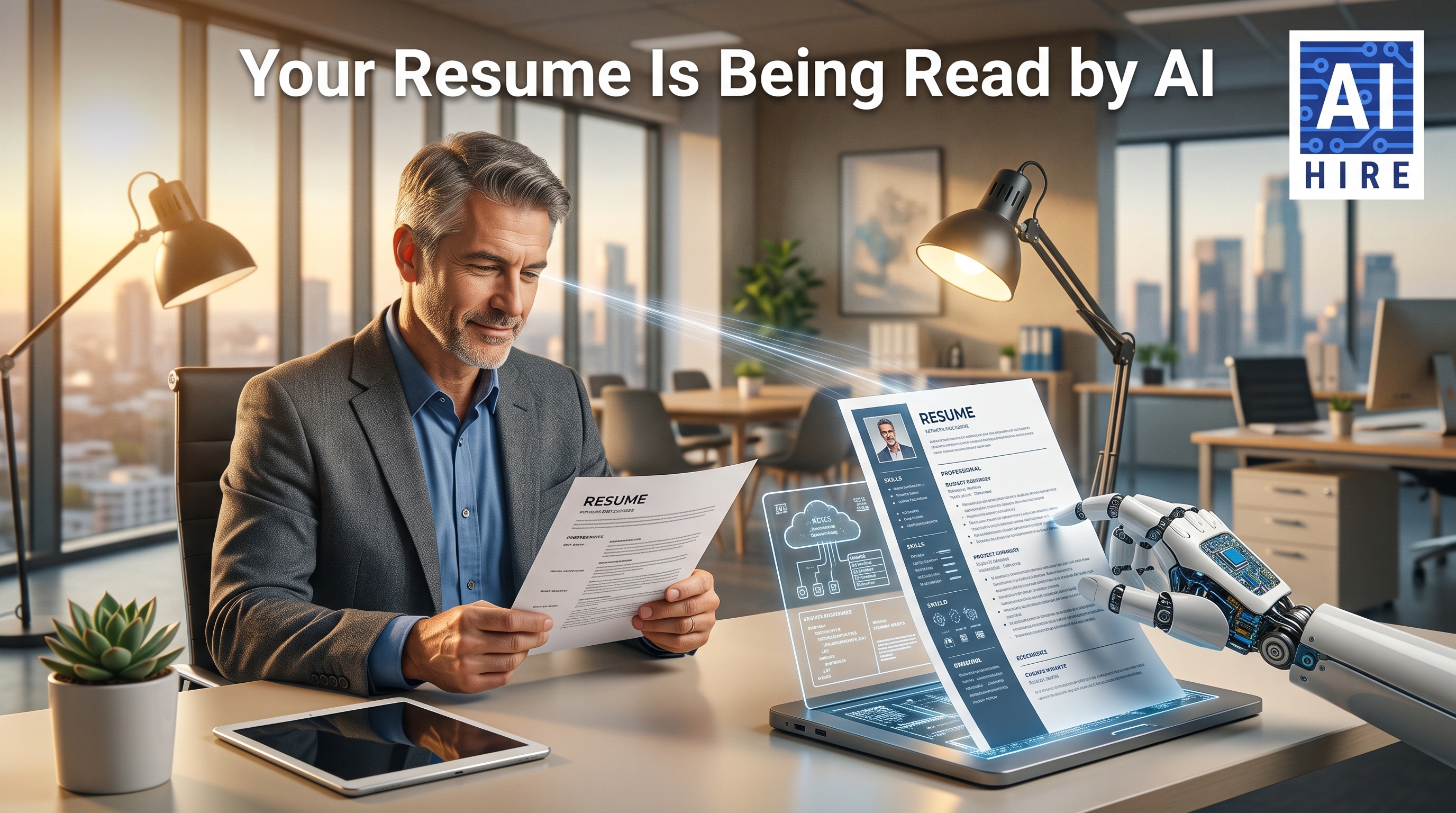
Before a human sees your resume, software will. How to write a CV that parses cleanly, ranks honestly, and survives the AI interview that now tests every claim on the page.