Ready to transform your hiring?Your next great hire is waiting.
Your next great hire is waiting.
Let AI find them.
Join engineering teams who replaced week-long hiring cycles with hours. No credit card required.
Join engineering teams who replaced week-long hiring cycles with hours. No credit card required.
Here is a statistic that should change how you prepare: technical problems are the number one preventable reason candidates underperform in online interviews. Not weak answers, not hard questions - a muffled microphone, a dying laptop, a connection that drops mid-story. And in 2026, when the interviewer is often an AI transcribing your words in real time, audio quality is not cosmetic: if the system cannot hear you clearly, it cannot score you fairly. The fix costs nothing but fifteen minutes of discipline.
You do not need equipment - you need geometry. Face your light source - a window in front of you is ideal, a window behind you turns you into a silhouette. Raise the camera to eye level (a stack of books works), frame yourself from mid-chest with a little headroom, and tidy whatever the lens can see. When speaking, look at the camera rather than the screen - it reads as eye contact in every format, human or AI.
Composure under technical failure is itself an interview answer - and a good one.
If the connection drops, rejoin calmly - well-built interview platforms are designed for reconnection and will resume the session. If audio degrades, say so plainly and fix it. No reasonable process penalises a candidate for a thirty-second glitch handled gracefully - what hurts is flustered improvising for ten minutes.
Interviewers increasingly read a smooth setup as basic digital literacy - fair or not, it is part of the impression. But the deeper reason is for you: every unit of attention spent fighting equipment is attention not spent on your answers. The checklist is boring, and that is exactly the point. Make the technology boring, so that the only memorable thing about your interview is what you said.
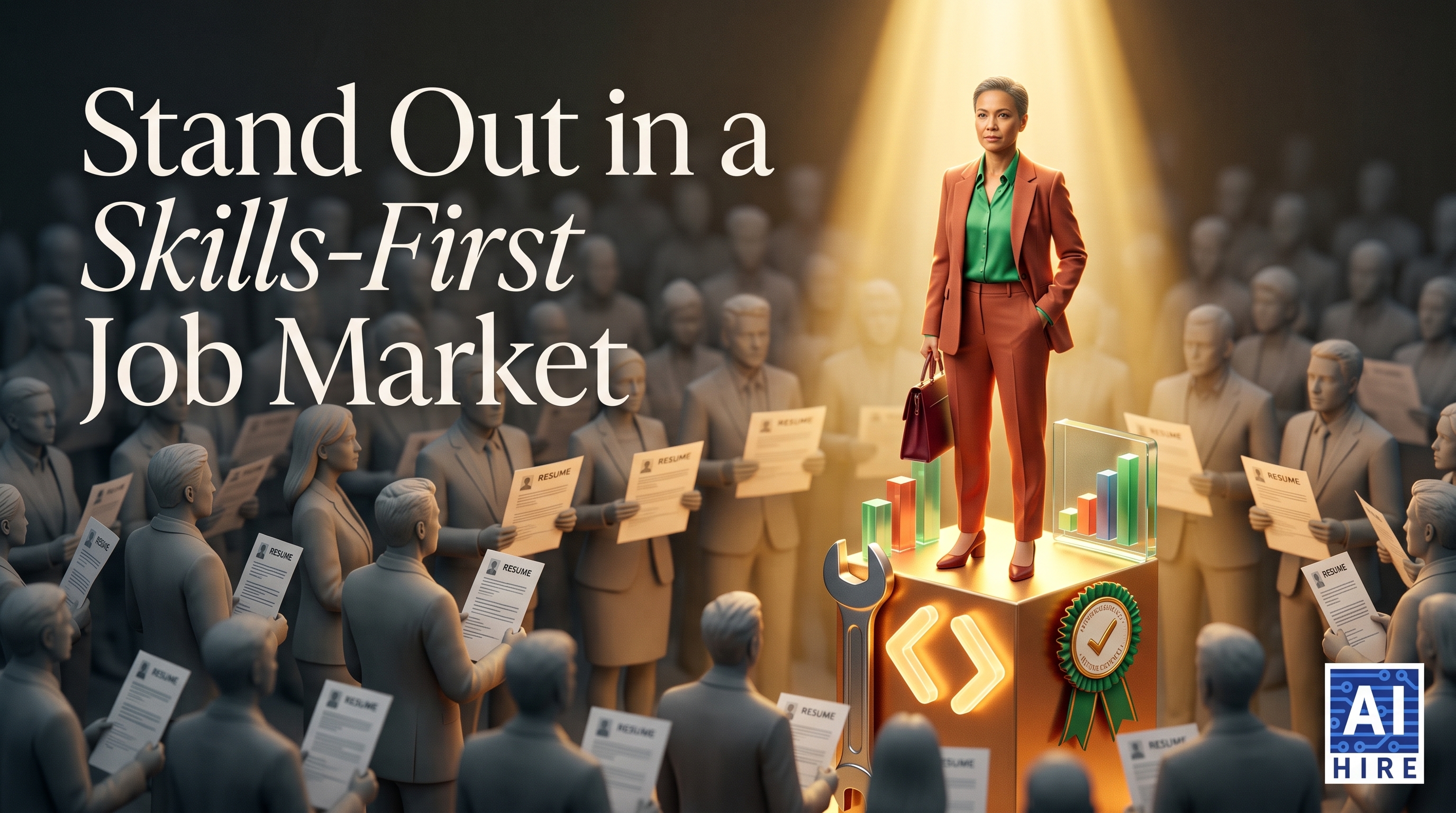
Skills-first hiring inverted the rules: demonstration beats signalling. How to win each stage - targeted applications, assessments as the real interview, proof-of-work, and AI as coach.
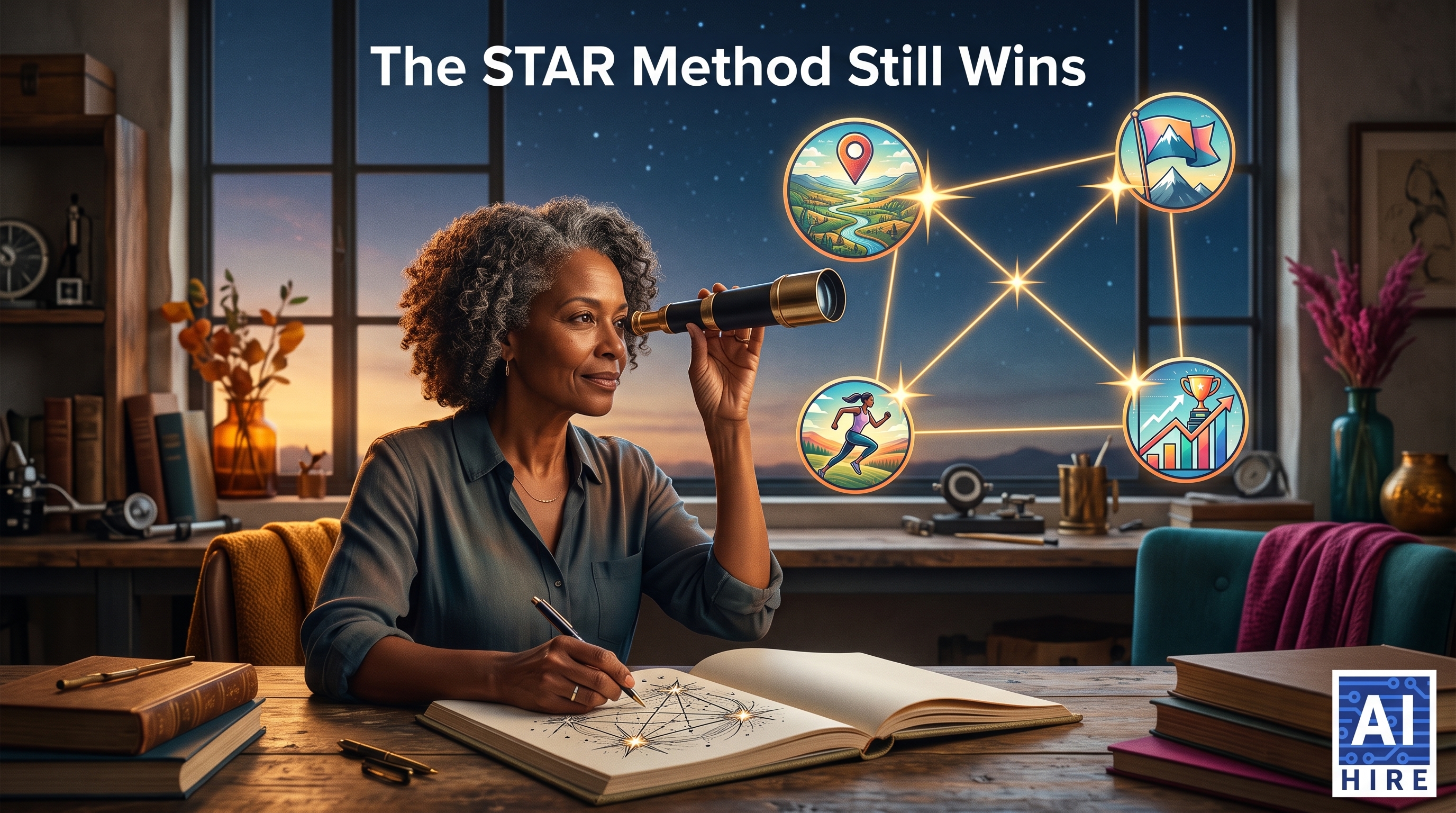
Interview formats changed beyond recognition - the STAR method got more valuable, not less. Why rubric-based and AI evaluation rewards structured answers, with a worked example and a prep plan.
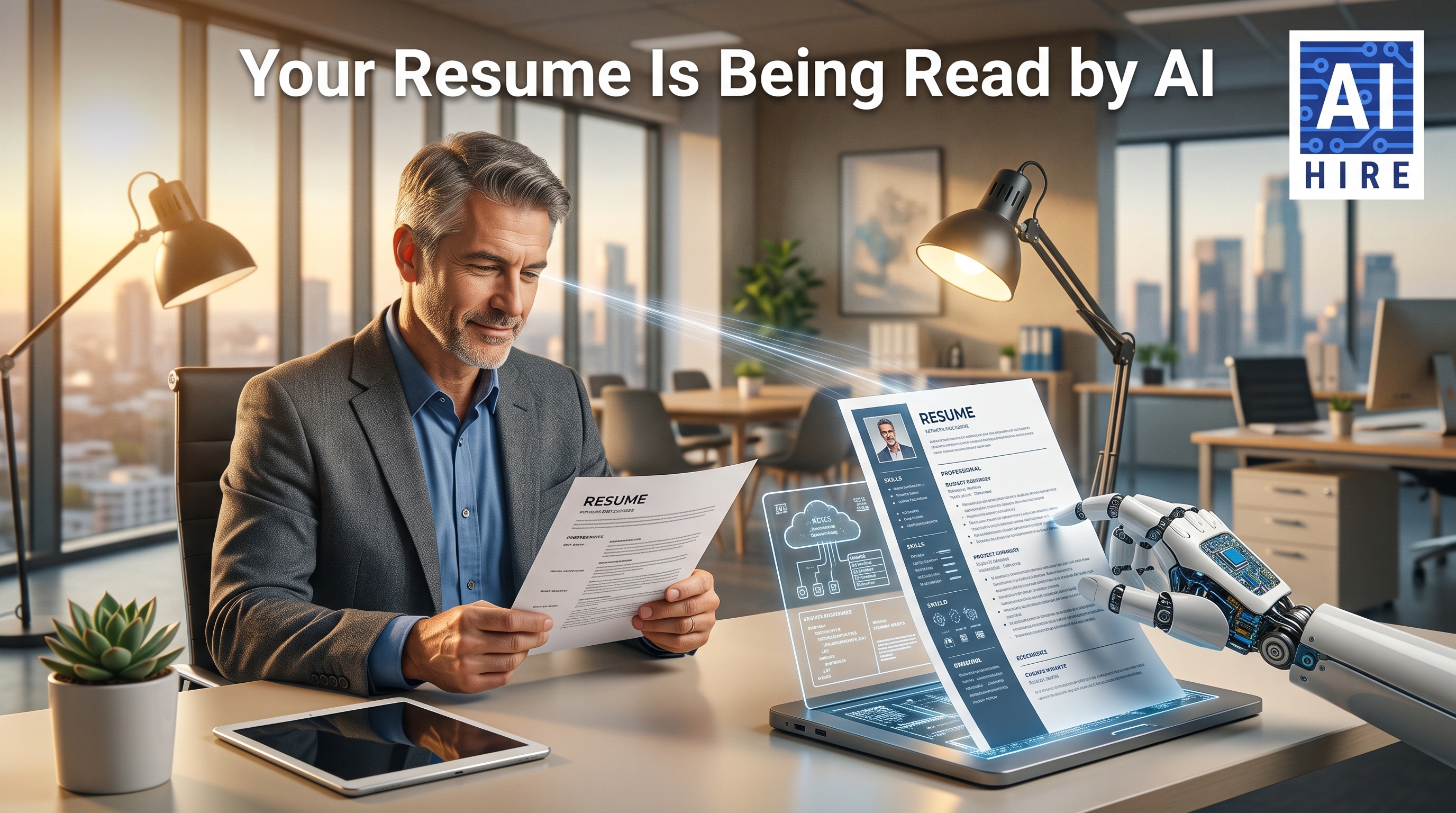
Before a human sees your resume, software will. How to write a CV that parses cleanly, ranks honestly, and survives the AI interview that now tests every claim on the page.