Ready to transform your hiring?Your next great hire is waiting.
Your next great hire is waiting.
Let AI find them.
Join engineering teams who replaced week-long hiring cycles with hours. No credit card required.
Join engineering teams who replaced week-long hiring cycles with hours. No credit card required.
You have decided to try AI interviews for a role. Good decision - but like any powerful tool, the results depend on how you set it up. Teams that treat AI hiring as “post the job and let the robot sort it out” get mediocre results. Teams that spend one thoughtful hour on configuration get a pipeline that outperforms anything they ran manually. Here is the playbook.
The job description is no longer just marketing - it is the source material the AI uses to build interview questions and scoring criteria. Be explicit about the five or six skills that actually determine success in the role, and honest about seniority. Vague inputs (“rockstar generalist, wears many hats”) produce vague interviews. Specific inputs produce sharp ones.
A typical AI-powered pipeline has three configurable gates:
The mistake to avoid: making the AI round too long. A focused 15-20 minute interview with adaptive follow-ups produces better signal - and far better completion rates - than a 45-minute marathon.
Tell candidates up front that the first round is an AI interview, what it measures, and roughly how long it takes. Transparency is not just regulatory best practice - it measurably improves completion rates. Give applicants a public link they can take when they are ready, within a deadline. Candidates interviewing at 9pm from a quiet kitchen after the kids are asleep will thank you.
The score gets your attention. The transcript earns your decision.
When results arrive, resist ranking by headline number alone. The real value is in the evidence: read the quoted answers behind each skill score for your top ten. Fifteen minutes of report review replaces what used to be a week of phone screens - but it is still your judgment doing the hiring.
Teams running this playbook typically see time-to-hire cut by a third to a half, every applicant interviewed instead of the top-of-pile few, and hiring managers spending their hours on a shortlist that has already demonstrated the skills - not just described them.
AIHire.io wraps this entire flow - job wizard, assessments, live AI interviews, proctoring, scoring, and a kanban pipeline - into one platform, so your first AI-powered hiring round is a one-hour setup, not an integration project. The robots handle the repetition. You handle the decision.
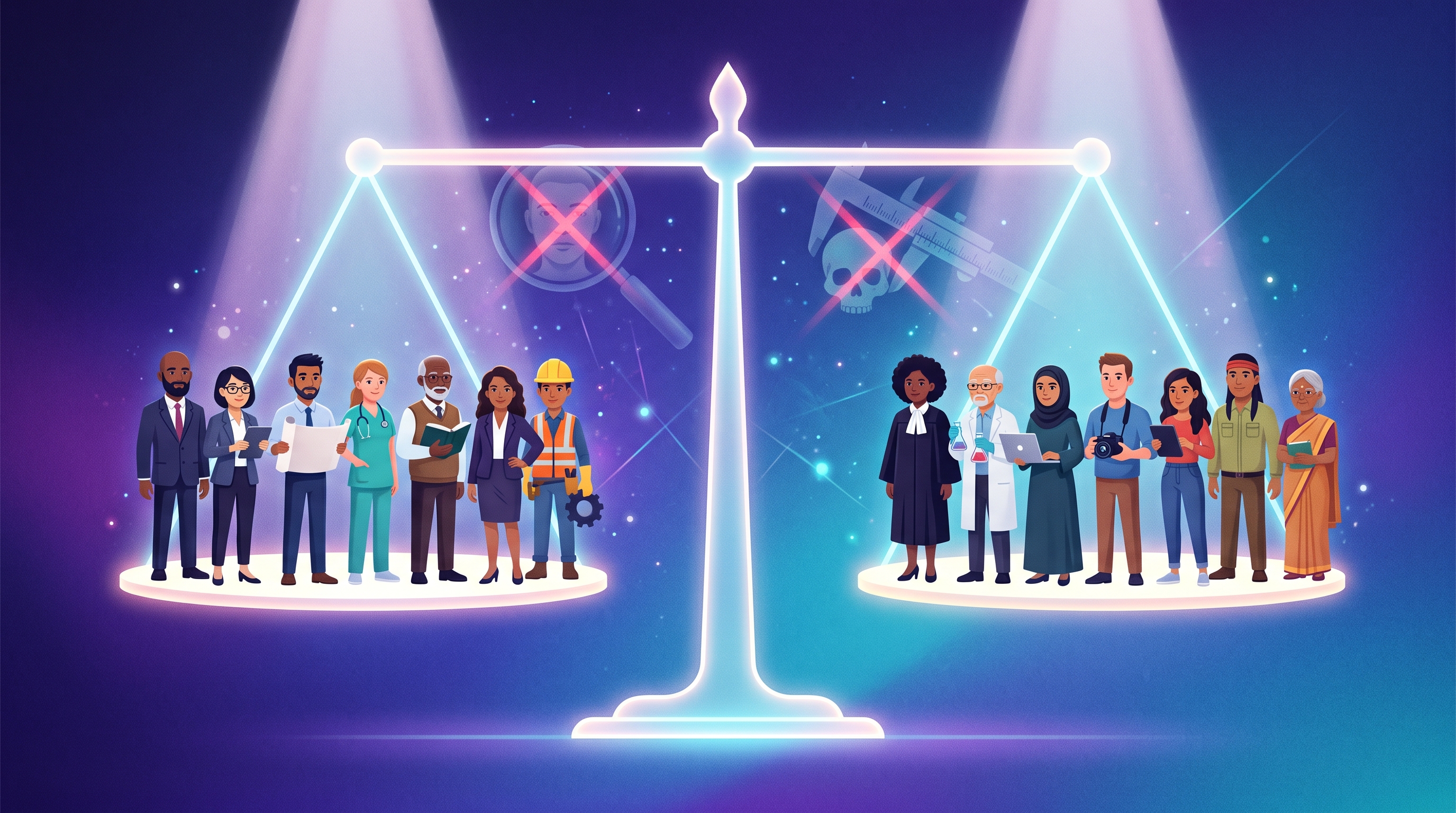
AI in hiring gets called both the cure for bias and its amplifier. Both claims are half-true. What actually determines the outcome is a short list of design choices.

If an AI interview influences who gets hired, its scoring should not be a black box. A step-by-step look at how a live conversation becomes a structured, evidence-backed report.
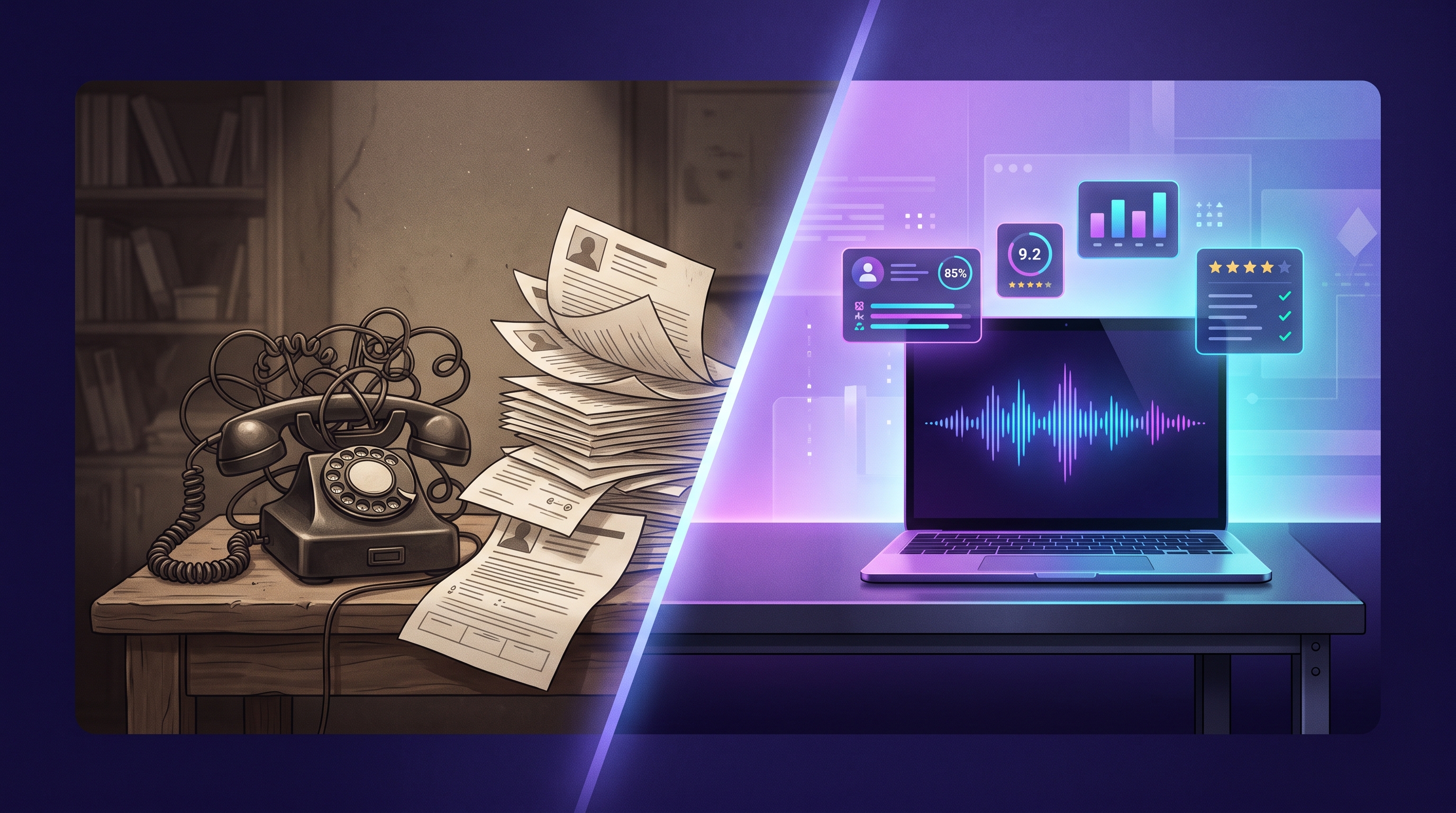
Phone screens are slow, inconsistent, and rarely audited. We put the traditional recruiter screen head-to-head with AI-led interviews across speed, fairness, depth, and candidate experience.