Ready to transform your hiring?Your next great hire is waiting.
Your next great hire is waiting.
Let AI find them.
Join engineering teams who replaced week-long hiring cycles with hours. No credit card required.
Join engineering teams who replaced week-long hiring cycles with hours. No credit card required.
The most common question employers ask about AI interviews is also the most important one: how does the score actually get made? If a system is going to influence who advances in a hiring process, its evaluation logic should not be a black box. Here is a clear walkthrough of how a modern AI interview goes from a live conversation to a structured, defensible report.
Good AI scoring starts before the interview does. When an employer configures a role, the system builds an evaluation framework from the job description: the skills that must be probed, the seniority level, the difficulty setting, and any custom instructions the hiring team adds. Every question the AI asks maps back to something the role actually requires.
This is the same principle behind structured human interviews - the format with the strongest evidence base in hiring research. The difference is that the AI applies the rubric identically for candidate number 1 and candidate number 301.
During the live interview, the AI is not silently judging tone of voice or facial micro-expressions - in fact, emotion recognition in hiring has been banned in the EU since early 2025, and reputable platforms avoid it entirely. What the system collects is what the candidate says: their explanations, examples, reasoning, and how they respond to follow-up questions that probe deeper on the skills that matter.
Adaptive follow-ups are the key advantage over one-way video interviews. If a candidate claims they scaled a database, the AI asks how. Vague answers get a chance to become specific - rehearsed answers get tested.
After the session ends, the full transcript is analysed dimension by dimension:
Each dimension gets a score with citations: the specific quotes from the transcript that justify the rating. A hiring manager reviewing the report can click through and verify every judgment.
The report ranks and summarises. It does not reject. Regulations like NYC Local Law 144 and the EU AI Act push the industry in exactly the direction it should have gone anyway: automated tools inform decisions, humans make them.
In practice, employers use AI interview reports the way they use assessment scores - as one structured signal alongside the resume, the portfolio, and the human interviews that follow.
At AIHire.io, transparent per-question scoring with employer override is built into the product, because we believe a score you cannot explain is a score you cannot use. When AI evaluation is done openly, it does not just speed hiring up - it makes it more defensible than the gut-feel process it replaced.
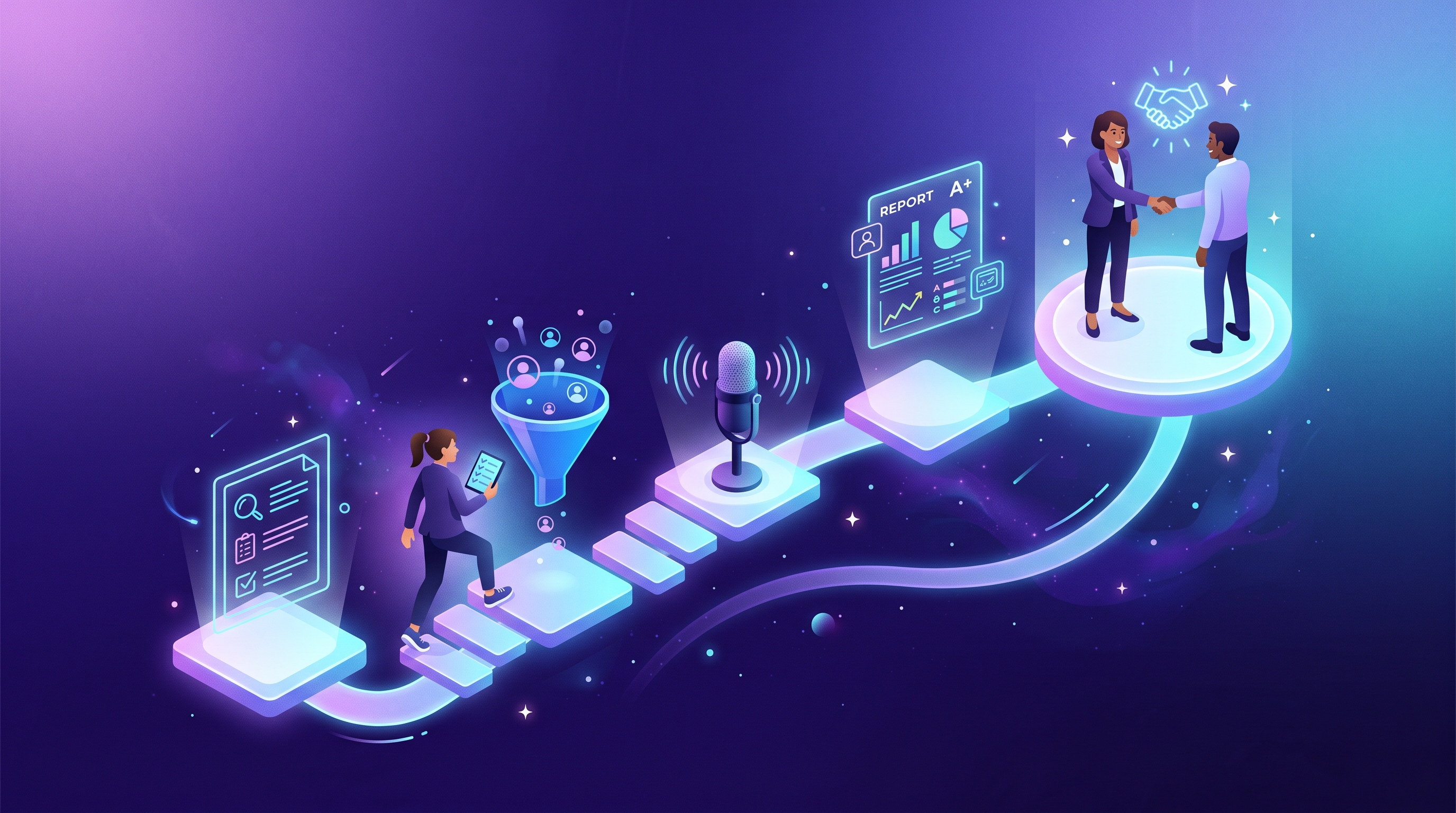
AI interviews reward good setup. A practical five-step playbook for your first AI-powered hiring round - from writing the job as an evaluation spec to reading reports like a pro.
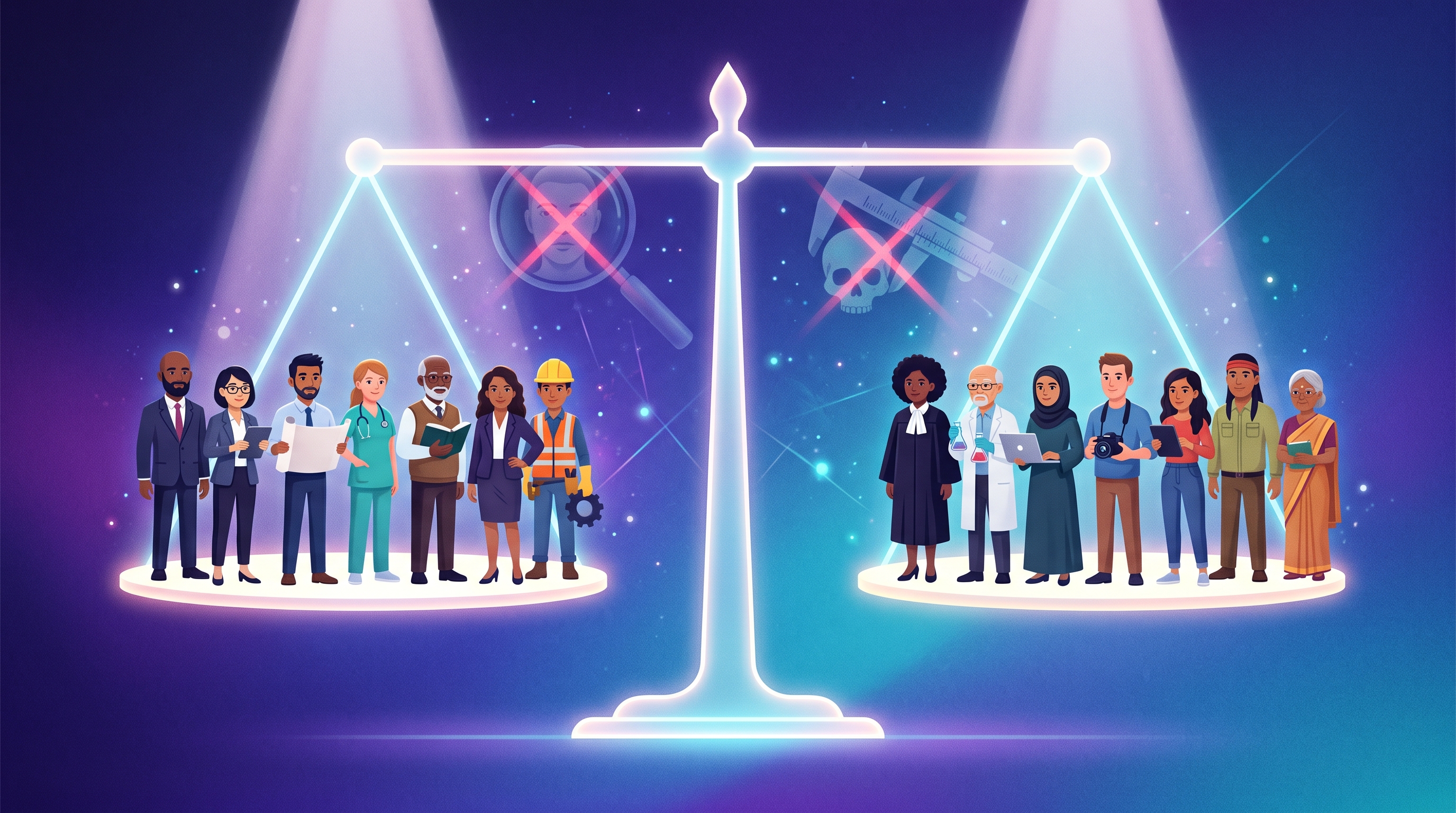
AI in hiring gets called both the cure for bias and its amplifier. Both claims are half-true. What actually determines the outcome is a short list of design choices.
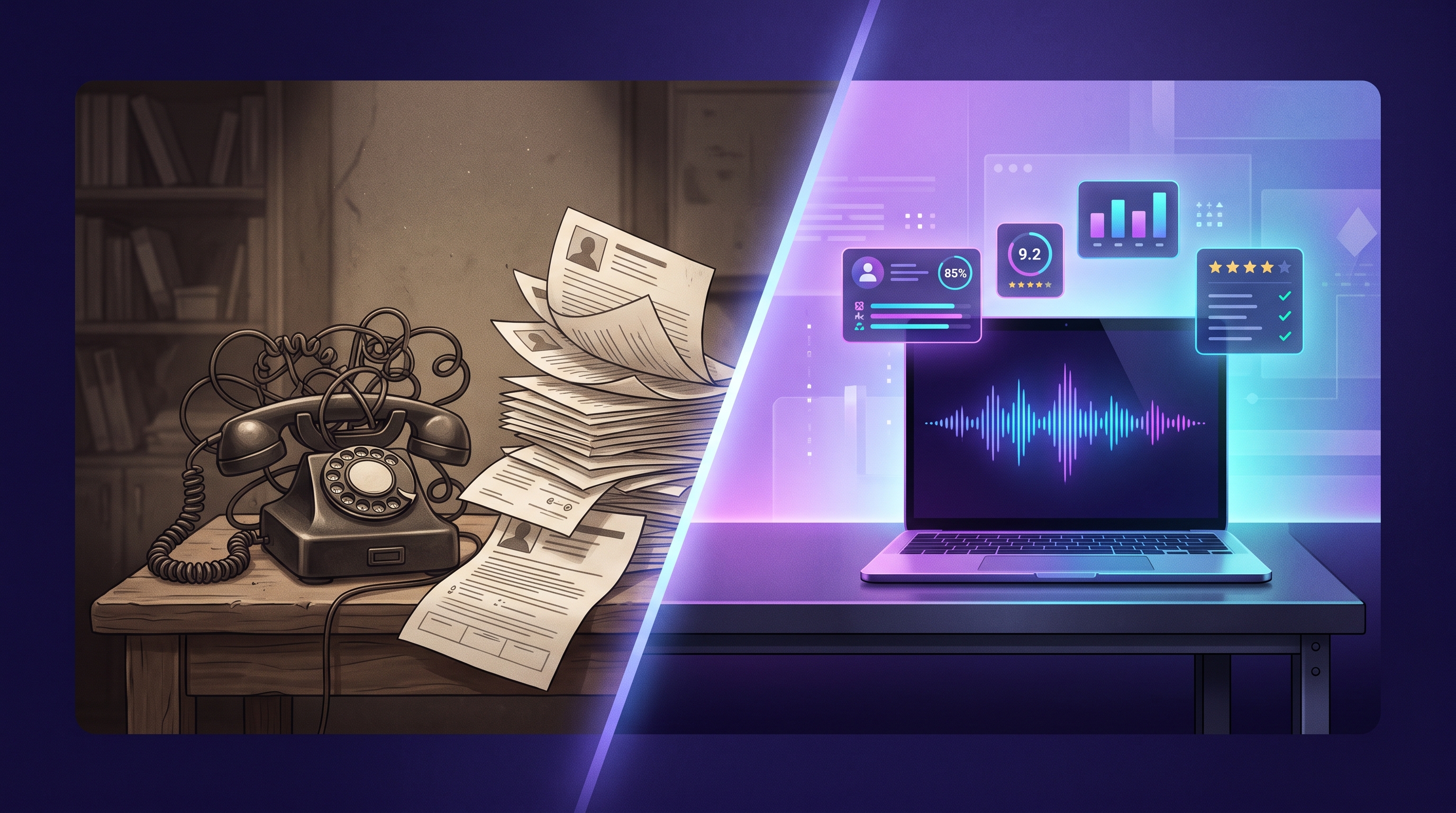
Phone screens are slow, inconsistent, and rarely audited. We put the traditional recruiter screen head-to-head with AI-led interviews across speed, fairness, depth, and candidate experience.